Paneer is the most important protein in vegetarian Indian cooking and one of the most misunderstood ingredients outside India. People often describe it as "Indian cottage cheese" or "like halloumi" — neither description is quite right. It's worth understanding properly because it behaves unlike any common Western cheese and its unique properties are precisely what makes it so useful in Indian cooking.
What paneer actually is
Paneer is a fresh, unaged cheese made by curdling hot whole milk with an acid — most commonly lemon juice or white vinegar — then draining and pressing the curds. The process is straightforward and quick: heat milk to just below boiling, add acid, watch the curds separate from the whey, strain through muslin, press under weight for an hour or two, and you have paneer. No aging, no cultures, no rennet.
The result is a firm, mild, slightly milky-tasting white cheese with a dense, rubbery texture when cold that softens when heated but never melts. This non-melting property is paneer's defining characteristic and the reason it's so central to Indian cooking.
Why paneer doesn't melt
Most Western cheeses melt when heated because they're made with rennet, which creates a protein structure that breaks down under heat. Paneer is made with acid instead, which creates a different protein structure — the curds bond tightly and irreversibly, meaning heat softens the texture but doesn't cause the proteins to flow. You can fry a cube of paneer in very hot oil and it will develop a golden crust while holding its shape perfectly inside.
This is why paneer works so well in Indian cooking, where high-heat methods (tandoor, wok, deep frying) would turn most cheeses into puddles. Paneer can be fried, grilled, baked, or simmered in curry and maintain its structure throughout.
The halloumi comparison: halloumi also doesn't melt when fried, which is why people compare them. But the similarities end there — halloumi is a brined, semi-aged cheese with a distinctly salty, rubbery quality. Paneer is unbrined, fresh, and mild. In Indian recipes, they're not interchangeable despite both being grillable.
How to make paneer at home
Homemade paneer is significantly better than most shop-bought versions and takes about 30 minutes of active work plus 1-2 hours of pressing.
- Heat 2 litres of whole milk in a heavy pot over medium heat, stirring occasionally to prevent scorching
- When it reaches just below boiling (you'll see steam and small bubbles at the edges), add 3-4 tablespoons of lemon juice or white vinegar and stir gently
- The curds will separate from the greenish-yellow whey almost immediately — if they don't, add a little more acid
- Remove from heat and let sit for 5 minutes
- Line a colander with muslin or a clean tea towel and pour in the curdled milk
- Rinse the curds with cold water to remove the acidic taste
- Gather the muslin, squeeze out excess liquid, and press under a heavy weight for 1-2 hours
- Refrigerate until firm, then cut into cubes
The best paneer dishes
Paneer Tikka: cubes of paneer marinated in spiced yogurt and cooked in a tandoor or on a hot grill until charred at the edges. The best introduction to paneer — the high heat creates a contrast between the slightly smoky, charred exterior and the soft, mild interior.
Palak Paneer: paneer in a smooth, spiced spinach sauce. The mildness of paneer balances the slight bitterness of spinach beautifully. One of the most popular vegetarian dishes in Indian cuisine globally.
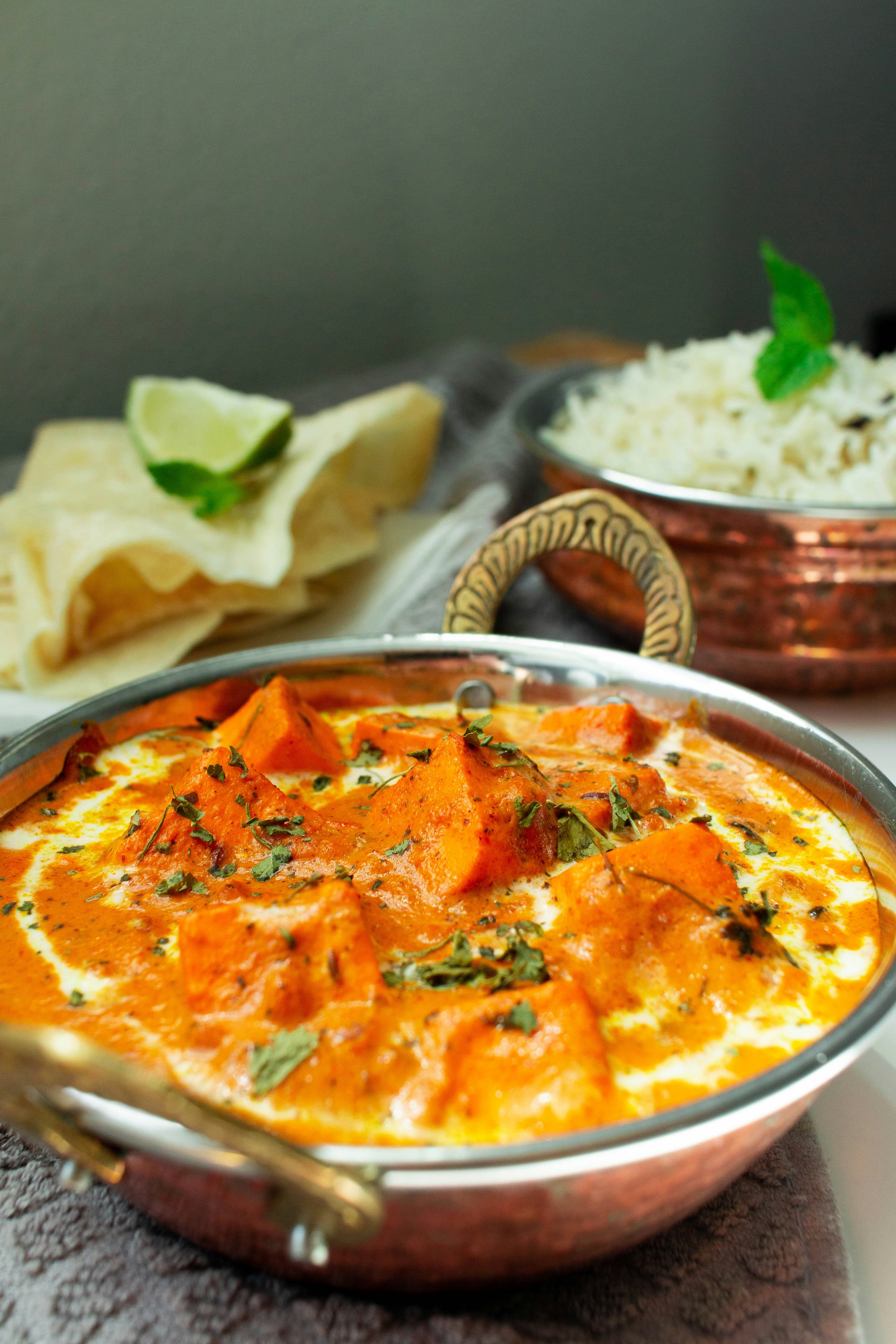
Paneer Butter Masala: paneer in a rich tomato-cream sauce — essentially the vegetarian version of butter chicken, using the same sauce. A reliable crowd-pleaser.
Shahi Paneer: paneer in a rich, creamy, mildly spiced sauce made from onion, cashews, and cream — more indulgent than butter masala, with a nutty richness that's distinctive.
Paneer Bhurji: scrambled paneer — crumbled and cooked with onions, tomatoes, and spices. Street food staple, often eaten for breakfast with roti. The Indian equivalent of scrambled eggs in terms of its everyday role.
Buying paneer
Good paneer is available at Indian grocery stores, most South Asian supermarkets, and increasingly at mainstream supermarkets in countries with large South Asian populations. Quality varies considerably — fresh paneer from an Indian grocery store is usually significantly better than the vacuum-packed supermarket version, which can be rubbery and bland. If you're making a dish where paneer is the centrepiece, homemade or fresh shop-bought is worth seeking out.