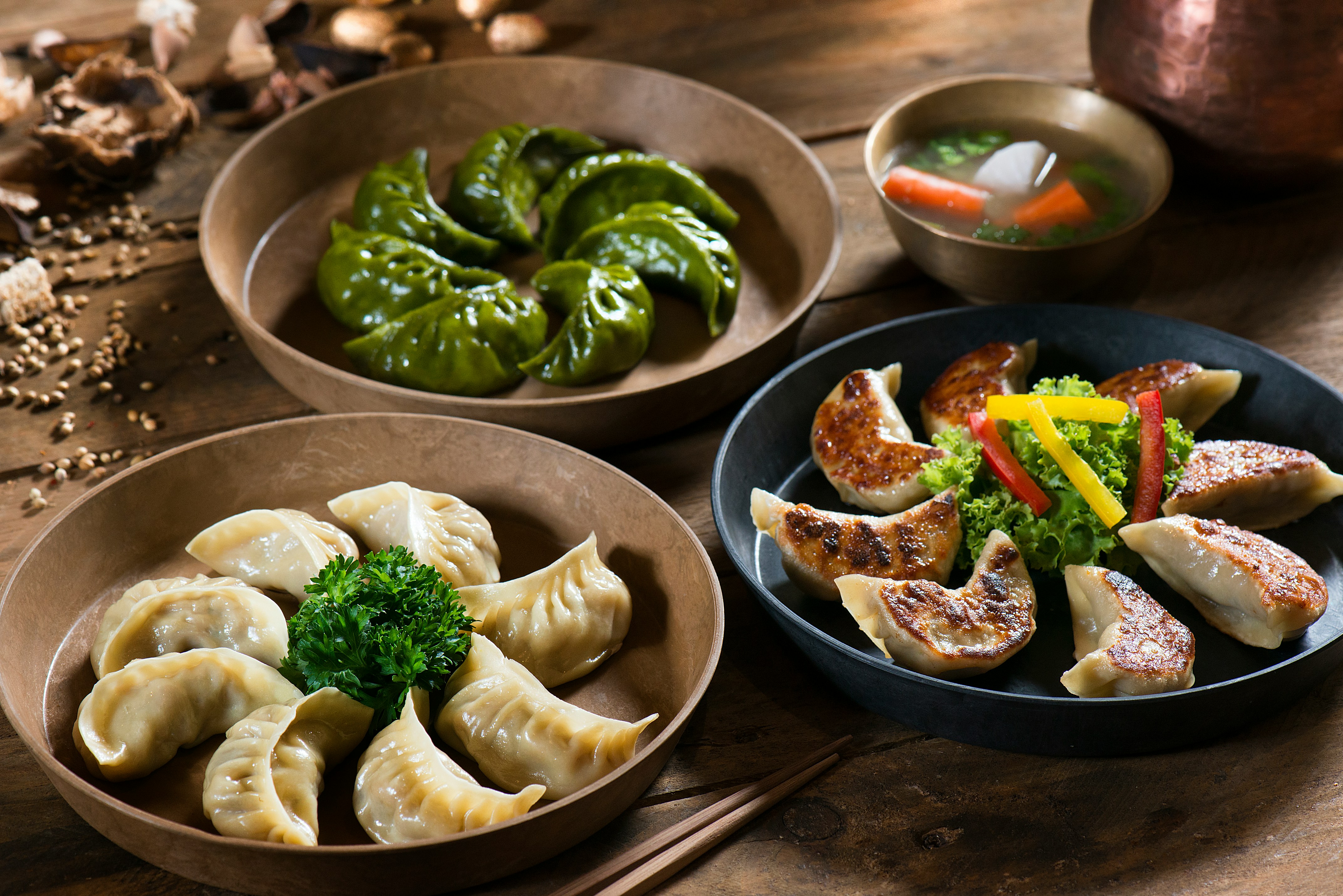
Chinese cuisine is one of the oldest and most varied in the world — eight major regional cooking traditions, thousands of distinct dishes, and enormous variation between what's actually eaten in China and what appears on Chinese restaurant menus outside it. This guide focuses on the dishes most likely to appear on menus globally, with honest explanations of what each one is and what to expect.
Kung Pao Chicken (宫保鸡丁)
Diced chicken stir-fried with dried red chillies, Sichuan peppercorns, peanuts, and vegetables (usually celery and spring onion) in a sweet-sour-spicy sauce. The Sichuan peppercorns create a distinctive numbing, tingling sensation (called málà) that's different from the heat of regular chillies — it's an acquired taste that most people who encounter it properly fall in love with. Originally from Sichuan province, now one of the most recognized Chinese dishes globally. The Western versions often reduce or omit the Sichuan peppercorns, which significantly changes the character of the dish.
Mapo Tofu (麻婆豆腐)
Soft silken tofu in a deeply savory, fiery sauce made from doubanjiang (fermented broad bean and chilli paste), minced pork or beef, fermented black beans, and Sichuan peppercorns. One of the great dishes in Chinese cooking — the contrast between the trembling, silky tofu and the aggressively flavored sauce is intentional and spectacular when executed well. The name translates loosely as "pockmarked old woman's tofu," referring to the legend of the woman who created it in Chengdu. Another Sichuan dish with the málà (numbing-spicy) characteristic.
Peking Duck (北京烤鸭)
Whole duck with air-dried skin lacquered with maltose and roasted in a wood-fired oven until the skin is extraordinarily crisp, thin, and glossy while the meat remains moist. Traditionally served in three courses at a Peking Duck restaurant: first the skin sliced tableside and eaten with thin pancakes, hoisin sauce, cucumber, and spring onion; then the meat served separately; then a soup made from the carcass. One of China's most refined dishes, requiring days of preparation and specialized technique. A proper Peking Duck experience is worth seeking out — the versions served at most casual Chinese restaurants are approximations.
Dumplings (饺子 — Jiaozi)
Thin dough parcels filled with minced pork and cabbage (the classic), or countless other combinations, then boiled, steamed, or pan-fried. Pan-fried dumplings (potstickers/guotie) develop a crispy bottom while the top remains soft — the textural contrast is part of the appeal. Eating dumplings is deeply embedded in Chinese culture: traditionally eaten on Lunar New Year, and the folding of dumplings is a family activity. The dipping sauce — usually soy sauce, rice vinegar, and chilli oil — is as important as the dumpling itself.
Char Siu (叉烧) — Cantonese BBQ Pork
Pork (typically shoulder or belly) marinated in a mixture of soy sauce, honey, hoisin, five-spice, and red fermented tofu, then roasted on skewers until caramelized and slightly charred at the edges. The result is sweet, savory, and sticky with a distinctive reddish color. Char Siu appears as a filling in steamed buns (char siu bao), on rice, or as a standalone protein. One of the most recognizable dishes from Cantonese cuisine and a staple of Hong Kong-style BBQ restaurants.
Hot Pot (火锅)
A bubbling pot of flavored broth at the center of the table, into which diners dip raw ingredients (thin-sliced meat, offal, vegetables, tofu, noodles) to cook briefly before eating, usually with a dipping sauce of sesame paste or soy. Sichuan hot pot uses a brick-red, aggressively spiced broth loaded with dried chillies and Sichuan peppercorns; Cantonese hot pot uses a milder, cleaner broth. Hot pot is as much a social experience as a meal — it takes time, it's eaten communally, and the variety of what you can dip is effectively unlimited.
Dim Sum (点心)
Technically not a single dish but a style of eating — small portions of many different dishes served in bamboo steamers and on small plates, traditionally eaten for breakfast or brunch with tea (yum cha). Har gow (steamed shrimp dumplings), siu mai (open-topped pork dumplings), char siu bao (BBQ pork buns), turnip cake, egg tarts — these are the classics. Dim sum is one of the great eating experiences in Chinese cuisine. There's a full guide to dim sum on this site for first-timers.
On regional differences: "Chinese food" is not one cuisine — it's eight major regional traditions (Cantonese, Sichuan, Hunan, Jiangsu, Zhejiang, Fujian, Anhui, Shandong) with profoundly different flavors, ingredients, and techniques. Most Chinese restaurants outside China serve primarily Cantonese food, occasionally Sichuan. What you've eaten probably represents a small slice of what Chinese cuisine actually is.
Wonton Soup (云吞汤)
Delicate dumplings (wontons) — thin dough wrapped around minced pork and shrimp, folded into a specific pleated shape — served in a clear, light chicken or pork broth. The contrast between the delicate, thin-skinned wontons and the clean, gently flavored broth is the point. Simple, refined, and far better than it sounds when made well. One of the dishes that converts people who think they don't like soup.
Egg Fried Rice (蛋炒饭)
Day-old cooked rice stir-fried in a very hot wok with eggs, soy sauce, and spring onions (and whatever else the cook wants to add). The day-old rice is essential — fresh rice is too moist and clumps together. The high heat of the wok creates a subtle char on the rice grains (wok hei — "breath of the wok") that's the defining characteristic of good fried rice and essentially impossible to replicate on a home hob at low heat. One of the most searched recipes in the world — there's a full guide to making it properly at home on this site.