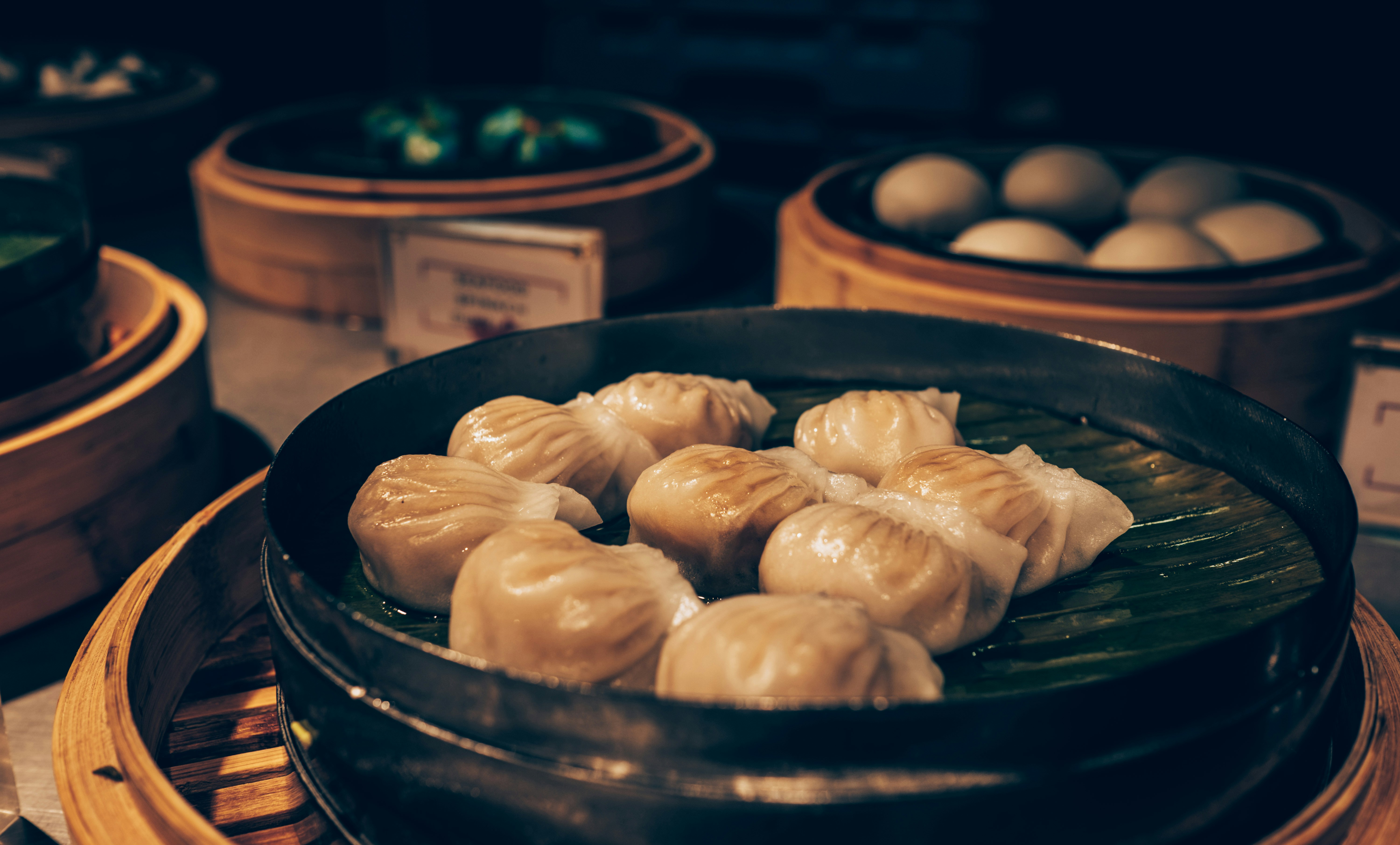
Dim sum is not really a meal — it's a style of eating. Small portions of many different dishes, served in bamboo steamers and on small plates, traditionally eaten in the late morning or early afternoon with endless pots of tea. The Chinese call it yum cha (飲茶) — "drinking tea" — because the tea is as central as the food. Walking into your first dim sum restaurant is genuinely disorienting: the noise, the carts, the unfamiliar dishes, the communal tables. Here's how to navigate it.
How dim sum works
Traditional dim sum restaurants serve food one of two ways: from rolling carts pushed through the dining room by staff, or from a paper menu that you tick and hand to a server. Cart service is the classic experience but increasingly rare outside of large dedicated dim sum restaurants — smaller places tend to use paper menus instead.
If there are carts: flag down the person pushing whatever looks interesting and point at what you want. They'll mark your table's bill and leave the dish. You don't need to order everything at once — dishes arrive continuously, and you keep adding as you go.
If there's a paper menu: tick the boxes next to what you want, write the quantity, and hand the menu to a server. Additional orders can be placed throughout the meal.
Dishes arrive in no particular order and you eat as they come — dim sum is not a starter-main-dessert structure. Tea is ordered at the start and replenished throughout. The bill is usually calculated by counting the number of steamer baskets and plates on your table.
The essential dishes to order first
Har Gow (虾饺) — Steamed Shrimp Dumplings
The benchmark dish of Cantonese dim sum. Delicate, translucent rice-flour dough wrapped around whole or coarsely chopped shrimp, pleated into a half-moon shape and steamed. A dim sum kitchen is judged by its har gow — the wrapper should be thin enough to see through, not sticky or gummy, and should hold together without splitting when picked up with chopsticks. Order these first.
Siu Mai (烧卖) — Open-Topped Pork Dumplings
Open-topped dumplings with a yellow wheat-flour wrapper, filled with seasoned pork and shrimp, topped with a dot of orange crab roe or carrot. Less delicate than har gow but deeply flavorful — the pork filling is seasoned with soy, ginger, and sesame and has a satisfying richness. Always served in sets of four. Another essential order.
Char Siu Bao (叉烧包) — BBQ Pork Buns
Available in two forms: baked (golden, slightly sweet pastry exterior) or steamed (white, fluffy bread dough). Both are filled with sweet-savory char siu (Cantonese roast pork). The baked version has a slight glaze; the steamed version opens at the top like a flower when it's cooked. Order one of each — they're quite different despite the same filling.
Other dishes worth ordering
Cheung Fun (肠粉) — Rice Noodle Rolls: broad, silky sheets of steamed rice noodle wrapped around char siu pork, shrimp, or beef, then doused with soy sauce and sesame. The texture is almost gelatinous and smooth — unlike anything in most Western cuisines. Served with sweet soy sauce on the side. One of the most satisfying dishes on any dim sum menu.
Turnip Cake (蘿蔔糕 — Lo Bak Go): pan-fried cakes made from grated daikon radish and rice flour, often mixed with dried shrimp and Chinese sausage. The exterior is crisp; the interior is soft, savory, and slightly sticky. One of the most underrated dim sum dishes — people who try it expecting a vegetable cake are always surprised by how savory and complex it is.
Chicken Feet (鳳爪 — Phoenix Claws): deep-fried then braised chicken feet in a black bean sauce until the skin is tender and sticky. This is the dish that most visually challenges first-timers — the appearance is off-putting to many Western diners. But the flavor is excellent and the texture, while unusual (you eat around and suck off the gelatinous skin rather than eating any bone), is genuinely enjoyable once you approach it without expectations. Worth trying if you're adventurous.
Egg Tarts (蛋撻 — Dan Tat): order these for dessert — small custard tarts with either a flaky pastry crust (Cantonese style) or a shortcrust pastry (Portuguese-influenced Macanese style, common in Hong Kong). The filling is a smooth, lightly sweet egg custard that should wobble gently. One of the great simple desserts.
Tea etiquette: when someone at your table refills your teacup, tap two fingers on the table as a silent thank you — this is standard dim sum etiquette, originating from a story about a Qing Dynasty emperor traveling incognito. When your teapot is empty, signal for a refill by leaving the lid slightly open or turned sideways on the pot.
How much to order
For two people: 4-6 different dishes is about right for a full meal, though you can keep ordering if you're still hungry. For four people: 8-10 different dishes. Dim sum dishes are small — typically 3-4 pieces per basket — so you're expected to order many different things rather than large quantities of each.
What to avoid on your first visit
Tripe, intestines, and other offal are excellent in dim sum but best approached once you're comfortable with the cuisine. Durian pastries appear on some menus — the smell alone may be enough to discourage you. Spring rolls are fine but generic, not representative of what makes dim sum special. Focus on the classics first.