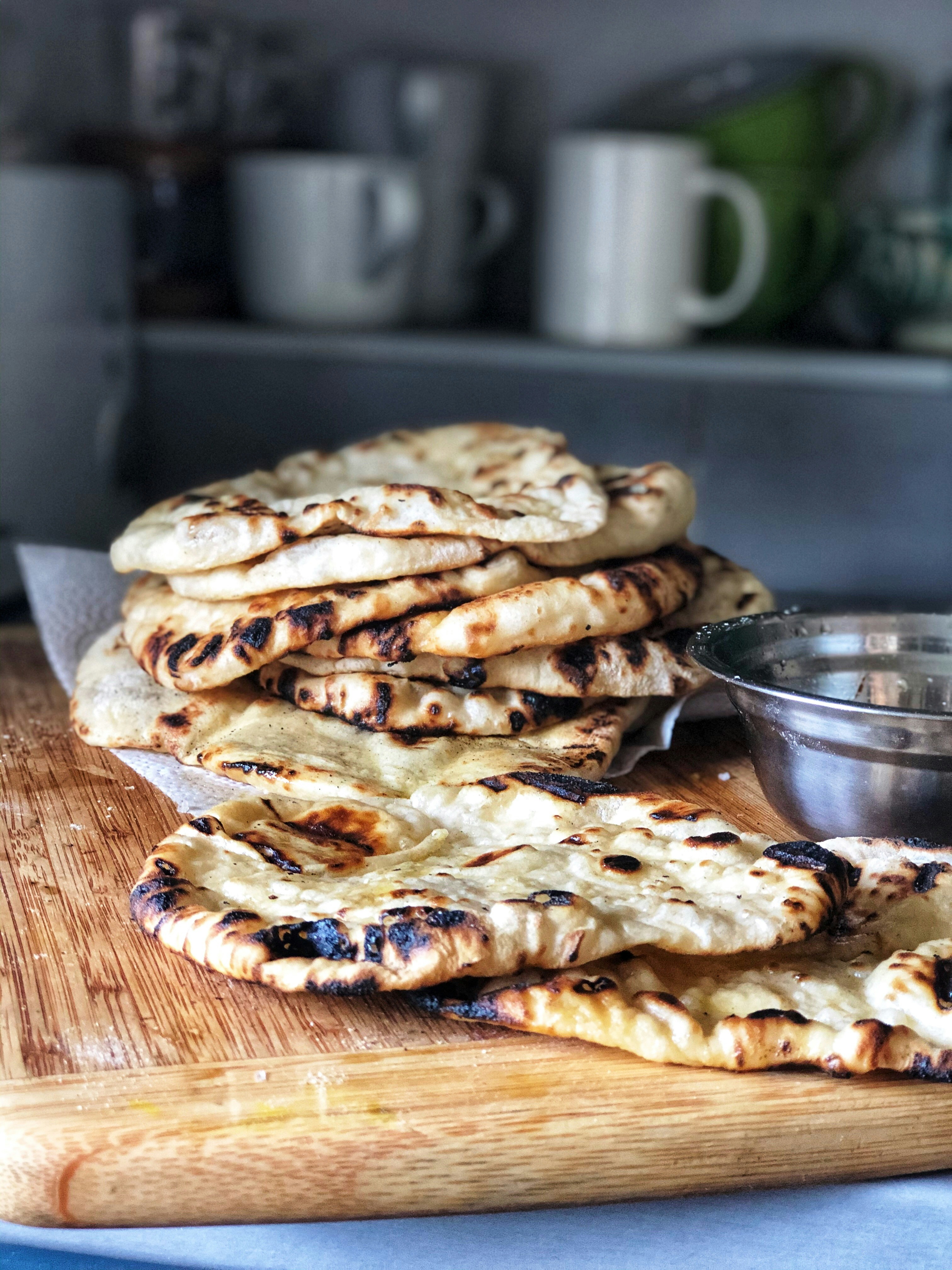
Indian bread is one of the most misunderstood parts of the cuisine outside India. Most people default to naan because it's what they know — but naan is actually one of the richer, less everyday breads in Indian cooking. Understanding the differences opens up the whole cuisine in a way that ordering naan every time doesn't.
Roti (Chapati)
The everyday bread of most Indian households — thin, unleavened, made from whole wheat flour (atta) and water, rolled flat and cooked on a dry tawa (flat griddle) until it puffs up slightly and develops char spots. No oil, no yeast, no dairy. Roti is what most Indian families eat at home daily; it's the workhorse bread of the cuisine. Light, slightly nutty from the whole wheat, and specifically designed to be torn and used to scoop up curry or dal. What restaurants call "chapati" is the same thing.
Naan
Leavened bread made with refined white flour (maida), yogurt, and sometimes egg — the dough is softer and richer than roti dough, and naan is traditionally cooked stuck to the inside wall of a tandoor oven, where the intense radiant heat creates the characteristic bubbles, char spots, and slightly chewy texture. Restaurant naan is often brushed with butter or ghee before serving. It's richer and more indulgent than roti — the bread equivalent of white bread vs. wholemeal. Garlic naan (brushed with garlic-herb butter) and cheese naan are common restaurant variations.
The tandoor difference: proper naan requires a tandoor — the extreme heat (400°C+) is what creates the texture. "Naan" cooked on a flat griddle or in a regular oven is a reasonable approximation but not quite the same thing. At a restaurant with a proper tandoor, naan is excellent; at one without, roti is often the better choice.
Paratha
Unleavened whole wheat flatbread cooked with oil or ghee on a tawa, folded and layered to create a flakier, richer texture than plain roti. The layering technique creates distinct layers that separate slightly when cooked. Plain paratha is already richer than roti; stuffed paratha (aloo paratha with spiced potato filling, gobi paratha with cauliflower, paneer paratha) is a complete meal on its own, eaten for breakfast across North India with yogurt, butter, and pickle. One of the great comfort foods in Indian cooking.
Puri
Small rounds of whole wheat dough deep-fried until they puff up into hollow spheres — the steam from the dough expands inside the hot oil, creating a dramatic balloon effect that collapses when you press it. Light, slightly crisp on the outside, soft inside. Always served immediately since they deflate quickly. Traditionally eaten with chole (chickpea curry) as chole-puri, one of the great North Indian breakfast and street food combinations. Also used in chaat — puri is the hollow shell that holds the fillings in pani puri.
Bhatura
Like puri but larger and made with leavened dough (refined flour, yogurt, sometimes baking powder), producing a softer, chewier result. Deep-fried like puri but puffier and more substantial. Specifically paired with chole — the combination of chole-bhature is one of Delhi's most iconic street foods and a weekend breakfast staple. Not interchangeable with puri despite the similar appearance.
Kulcha
Leavened flatbread similar to naan but softer and thicker, often stuffed with onion, potato, or paneer, cooked in a tandoor or on a tawa. Amritsari kulcha — a stuffed, crisp-edged version from Amritsar — is one of Punjab's signature dishes. Served with chole, similar to bhatura but with a different texture profile.
Which bread with which dish?
- Roti — with any curry or dal for an everyday meal. Best choice if you want the bread to support rather than compete with the curry.
- Naan — with rich, creamy curries like butter chicken or dal makhani. The richness of naan matches the richness of the sauce.
- Paratha — eat plain or stuffed for breakfast with yogurt and pickle, or with any curry. Aloo paratha with raita is a complete meal.
- Puri — specifically with chole or dal, or as part of chaat. Not a curry-pairing bread.
- Bhatura — only with chole. This is a paired dish, not a general-purpose bread.