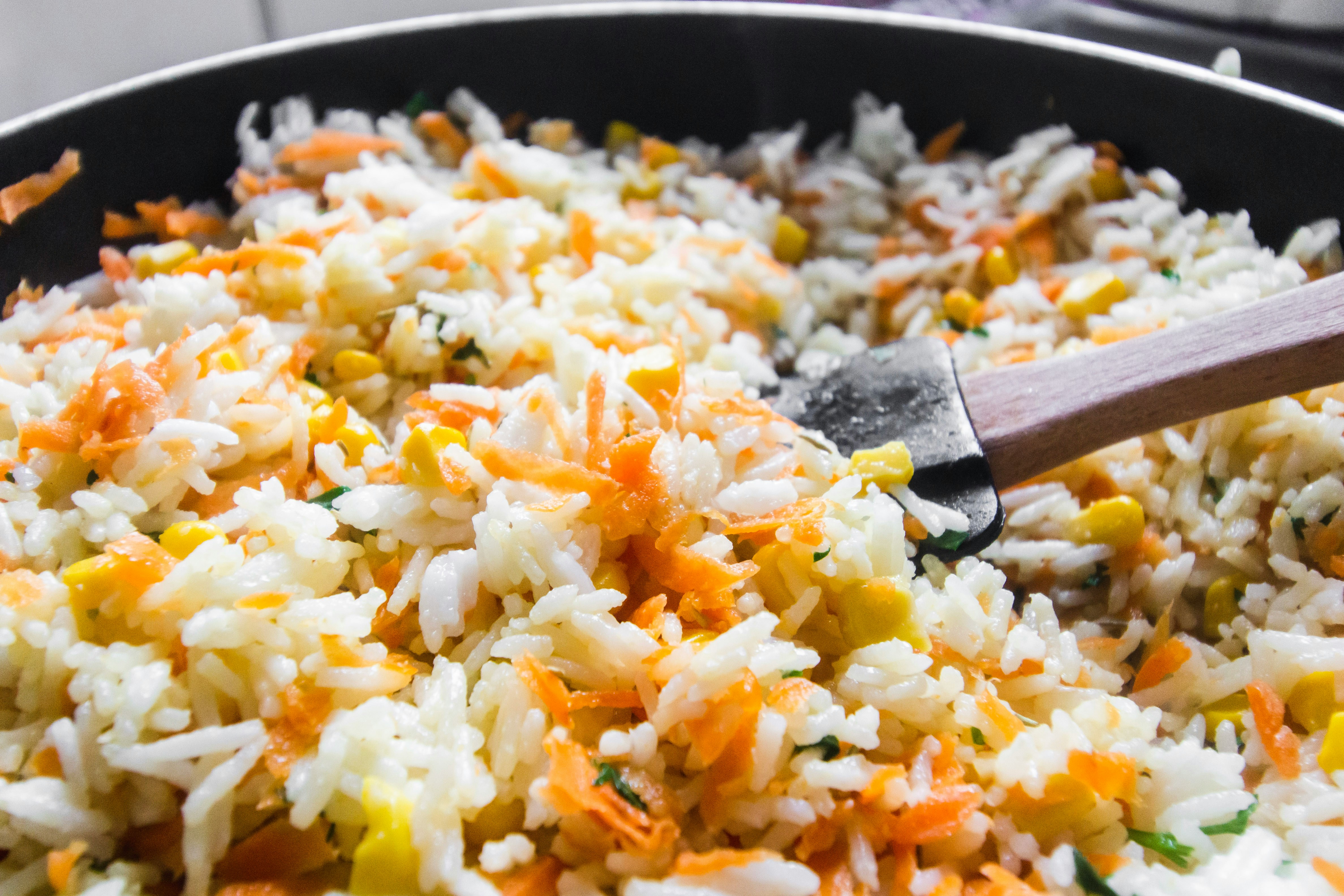
Egg fried rice should be simple — rice, eggs, soy sauce, spring onions. Most home versions miss the mark not because the recipe is complicated, but because they skip two things that make the difference between mediocre and genuinely good: day-old rice, and properly high heat. Fix those, and everything else follows.
Why day-old rice is non-negotiable
Freshly cooked rice contains too much moisture. When it hits a hot wok, the steam from that moisture creates clumping and prevents the grains from frying properly. You end up with a soft, slightly mushy texture rather than the distinct, separate grains that define good fried rice.
Day-old rice has dried out in the refrigerator overnight. The grains are firmer, drier on the surface, and separate easily. When they hit hot oil, they fry rather than steam — each grain gets a slight golden coating rather than clumping together.
Plan ahead: cook your rice the day before, spread it on a tray to cool, then refrigerate uncovered overnight. Use it the next day. This is the single highest-impact change you can make to your fried rice.
On wok hei — and the home cook's limitation
Wok hei (鑊氣) literally means "breath of the wok" — the slightly smoky, charred quality that restaurant fried rice has and home versions rarely achieve. It comes from extremely high heat (restaurant wok burners reach 3-4 times the output of a domestic hob) that creates a brief, intense sear on the rice and ingredients.
The honest truth: you cannot fully replicate wok hei at home with a standard electric or gas hob. But you can get closer by: using the heaviest pan you own (a cast iron skillet or carbon steel wok holds heat better than a light non-stick), heating it empty on the highest heat for 2-3 minutes before adding oil, and cooking in small batches rather than crowding the pan.
The most important rule
Never crowd the pan. A crowded pan drops the temperature dramatically, turning a fry into a steam. For two portions of fried rice, use a large pan or cook in two separate batches. Restaurant woks are enormous and the burners are extremely powerful — they maintain heat even when a large amount of cold rice is added. Your home hob cannot do this if you add too much at once.
Ingredients (serves 2)
- 300g day-old cooked jasmine or long-grain rice (about 150g dry weight before cooking)
- 3 eggs
- 2 tablespoons neutral oil (vegetable, sunflower, or lard for more flavor)
- 3 spring onions (scallions), thinly sliced — whites and greens separated
- 2 cloves garlic, finely minced
- 2 tablespoons light soy sauce
- 1 teaspoon sesame oil (added at the end, not for cooking)
- White pepper to taste
- Salt if needed
Method
Step 1: Prep everything before you start
Fried rice cooks fast on high heat — you don't have time to chop anything once you start. Have all ingredients measured, sliced, and within arm's reach of the hob before you turn on the heat. Break the eggs into a bowl and beat lightly. Break up any clumps in the cold rice with your fingers.
Step 2: Heat the pan properly
Place your pan (wok, cast iron skillet, or the heaviest pan you have) on the highest heat you can produce. Leave it empty for 2-3 minutes until it's very hot — you should see a faint wisp of smoke. Add 1.5 tablespoons of oil and swirl to coat.
Step 3: Cook the eggs
Pour in the beaten eggs and let them set for about 10 seconds, then scramble them with quick strokes — you want them just barely set, still slightly wet. Remove them from the pan immediately and set aside. They'll finish cooking when you add them back at the end.
Step 4: Aromatics and rice
Add the remaining oil if needed. Add the white parts of the spring onions and the garlic, and stir-fry for 20-30 seconds. Add the cold rice all at once and press it flat against the pan. Leave it undisturbed for 1 minute — this is where you get any char on the grains. Then stir and toss, pressing and stirring for another 2-3 minutes until every grain is heated through and slightly coated in oil.
Step 5: Season and finish
Add the soy sauce by pouring it around the edge of the pan (it hits the hot metal before the rice, caramelizing slightly). Toss to coat evenly. Add the scrambled eggs back, breaking them into pieces as you mix. Add the green parts of the spring onions, the sesame oil, and white pepper. Toss once more, taste for seasoning, and serve immediately.
Serve immediately. Fried rice deteriorates quickly as it sits — the grains absorb moisture from the eggs and sauce and become soft. Eat it straight from the pan while the texture is at its best. This is another reason restaurant fried rice tastes better — it goes from wok to table in under two minutes.
Variations worth trying
Yang Chow Fried Rice (扬州炒饭): the classic Cantonese restaurant version, with char siu pork, shrimp, peas, and scrambled egg. Follow the same method but add the cooked proteins with the rice.
Salted Fish and Chicken Fried Rice: a Cantonese specialty — small amounts of salted/dried fish add an intense umami backbone that's dramatically more complex than soy sauce alone. Found at good Cantonese restaurants; harder to replicate at home without sourcing the right dried fish.
Add whatever you have: fried rice is fundamentally a leftover dish. Leftover vegetables, cooked chicken, frozen peas, corn — all work. The method stays the same regardless of what you add.