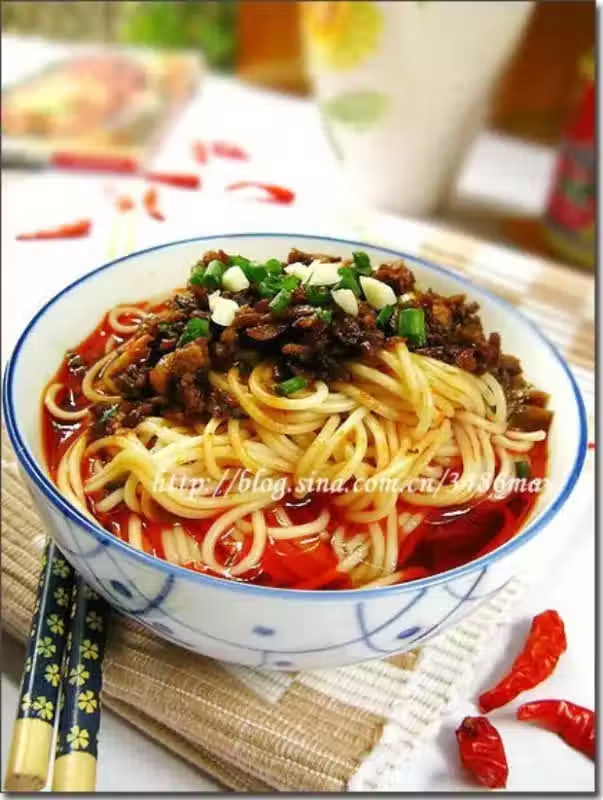
Dan dan noodles (担担面, dàndànmiàn) takes its name not from an ingredient or a flavor, but from how it was originally sold: by street vendors in Chengdu who carried two baskets — one with noodles, one with sauce and toppings — balanced on either end of a shoulder pole called a "dan" (担). The vendor would walk through neighborhoods, assembling bowls to order on the spot. The pole is long gone from how the dish is served today, but the name has stuck for over a century.
What makes it distinct
Traditional Sichuan dan dan noodles are served in a relatively small portion with very little broth — closer to a sauced noodle dish than a soup, despite sometimes being served with a small amount of liquid at the bottom of the bowl. The defining element is the sauce: a combination of chilli oil, Sichuan peppercorn, soy sauce, and Yibin zhacai (a type of preserved mustard stem that contributes a distinctive salty, savory crunch), tossed through thin wheat noodles and topped with minced pork that's been stir-fried until crispy at the edges.
The result is intensely savory, spicy, slightly numbing from the Sichuan peppercorn, and textured by the crispy pork and crunchy preserved vegetable — a dish built on contrast rather than a single dominant flavor.
A note on Western versions: dan dan noodles served outside China — especially in the US and UK — are frequently presented as a soup with a generous amount of broth and a creamy, sesame-heavy sauce. This is a real and tasty adaptation, but it's a significant departure from the traditional Sichuan version, which is drier, spicier, and built more around the chilli oil and peppercorn than around sesame paste or broth. Neither version is "wrong," but they're genuinely different dishes wearing the same name.
Ingredients (serves 2)
For the pork topping:
- 150g minced pork
- 1 tablespoon Shaoxing wine
- 1 tablespoon light soy sauce
- 1 teaspoon dark soy sauce
- 2 tablespoons Yibin zhacai (preserved mustard stem), finely chopped — or substitute with finely chopped pickled mustard greens
- 1 tablespoon oil
For the sauce (per bowl):
- 2 tablespoons chilli oil, with sediment
- 1 tablespoon light soy sauce
- 1 teaspoon dark soy sauce
- ½ teaspoon Sichuan peppercorn powder (toast whole peppercorns and grind, or use store-bought)
- 1 teaspoon Chinkiang (black) vinegar
- 1 garlic clove, minced
- 1 tablespoon sesame paste or tahini, loosened with a little hot water
- 2 tablespoons noodle cooking water
To finish:
- 200g fresh thin wheat noodles (or dried, if fresh isn't available)
- 2 tablespoons roasted peanuts, crushed
- 2 spring onions, finely chopped
Method
Step 1: Cook the pork topping
Heat the oil in a wok over high heat. Add the minced pork and break it up, stir-frying until it browns and the edges start to crisp slightly — this takes a few minutes longer than you'd expect, but the slightly crisped texture matters for the final dish. Add the Shaoxing wine, both soy sauces, and the chopped zhacai, stir to combine, and cook for another minute. Set aside.
Step 2: Build the sauce in each bowl
Divide the chilli oil, both soy sauces, Sichuan peppercorn powder, vinegar, garlic, and loosened sesame paste between two serving bowls. Mix to combine into a thick, fragrant base sauce.
Step 3: Cook the noodles
Cook the noodles according to package instructions until just done. Reserve a couple tablespoons of the noodle cooking water before draining.
Step 4: Assemble
Add a tablespoon of hot noodle water to each bowl of sauce and stir to loosen everything into a cohesive sauce. Add the drained noodles directly to the bowl and toss thoroughly to coat every strand — this tossing step is essential, since the sauce needs to be mixed through before eating, not left pooled at the bottom. Top with the cooked pork, crushed peanuts, and chopped spring onions.
Eating it properly: mix everything together thoroughly before your first bite — the sauce, pork, and noodles should be fully combined, not eaten in layers. A well-tossed bowl coats every strand of noodle evenly, which is the entire point of how the dish is constructed.