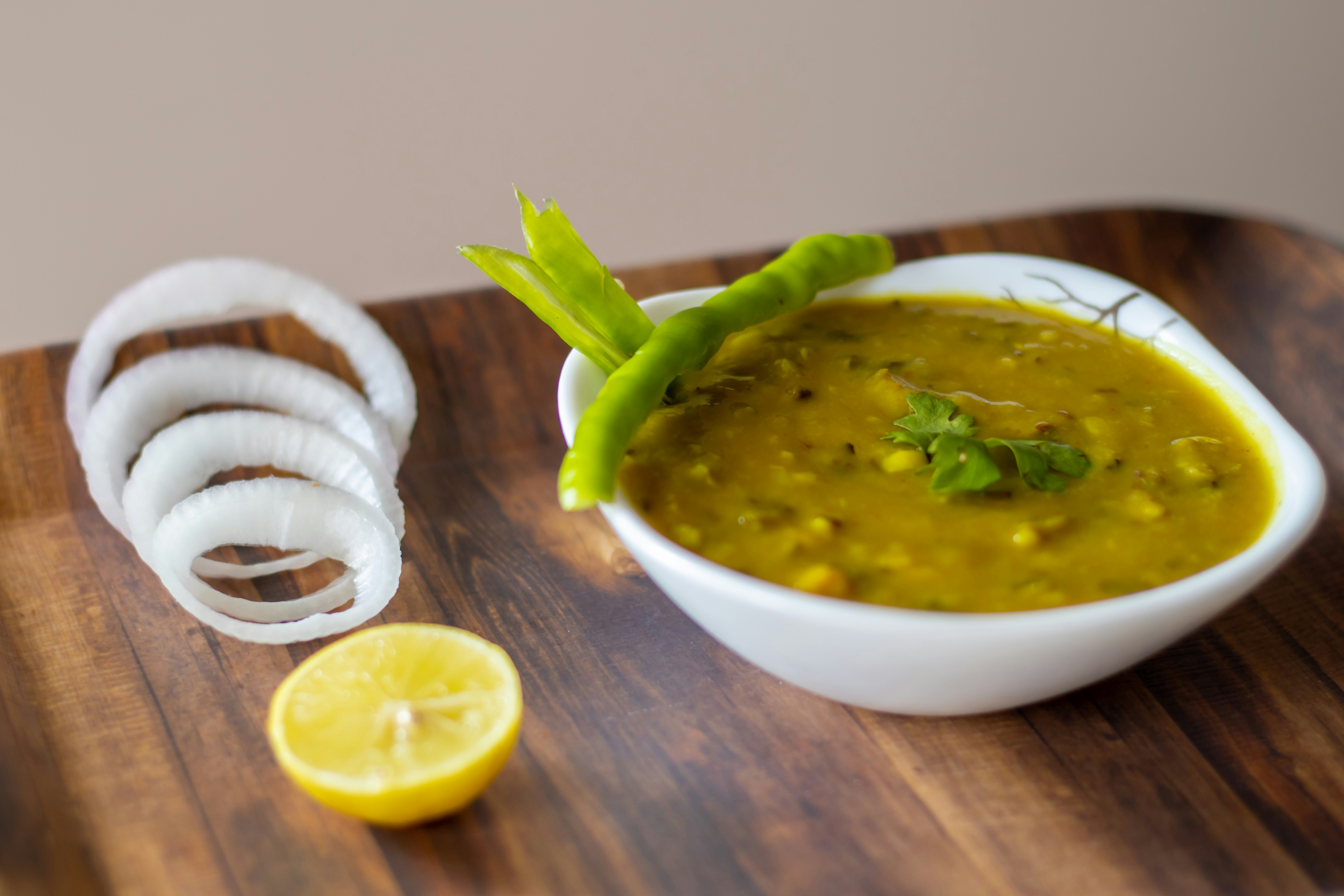
Dal Makhani is proof that the most impressive dishes are often the simplest in concept: whole black lentils, slow-cooked until they almost dissolve, finished with butter and cream. The recipe has very few ingredients and no complicated techniques. What it requires is time — and most home versions skip exactly that, producing a dish that's perfectly fine but not the deeply rich, silky thing a proper Dal Makhani should be.
What makes a great Dal Makhani
Three things, in order of importance:
- Cooking time. The lentils need to cook long enough that some of them break down and thicken the broth naturally, while the whole ones retain just enough structure to give the dish body. This takes hours, not 45 minutes. Restaurant versions are often cooked overnight on low heat; at home, 3-4 hours produces noticeably better results than 1 hour, and 6+ hours is better still.
- Butter quantity. The "makhani" in the name means "buttered" — this is not a dish to be tentative with butter. A proper version uses a meaningful amount, and it shows in the final richness and gloss of the sauce.
- Kasuri methi (dried fenugreek leaves). Added at the end, this ingredient is what gives Dal Makhani its characteristic slightly bitter, aromatic edge that distinguishes it from a plain lentil curry. Don't skip it.
Ingredients (serves 4)
- 200g whole black urad dal (whole black lentils), soaked overnight
- 50g red kidney beans (rajma), soaked overnight — optional but traditional
- 3 tablespoons butter, plus more to finish
- 1 tablespoon neutral oil
- 1 large onion, very finely chopped
- 1 tablespoon ginger-garlic paste (or 5 garlic cloves + 1-inch ginger, blended)
- 2 medium tomatoes, puréed, or 3 tablespoons tomato paste
- 1 teaspoon cumin seeds
- 1 teaspoon coriander powder
- ½ teaspoon red chilli powder (adjust to taste)
- ½ teaspoon garam masala
- 1 teaspoon kasuri methi (dried fenugreek leaves), crushed between your palms
- 100ml single cream or heavy cream
- Salt to taste
- Water as needed
Method
Step 1: Cook the lentils
Drain the soaked lentils and kidney beans. Place in a large pot or pressure cooker with enough water to cover by about 5cm, and a pinch of salt. If using a pressure cooker: cook for 20-25 minutes after the first whistle. If using a regular pot: bring to a boil, then simmer covered for 1-1.5 hours until completely soft. The lentils should be very tender — almost collapsing — not just cooked through.
Step 2: Build the base
In a separate heavy-bottomed pan (a Dutch oven or thick-based pot works best), heat the butter and oil together over medium heat. Add the cumin seeds and let them sizzle for 30 seconds until fragrant. Add the finely chopped onion and cook, stirring regularly, for 15-20 minutes until deeply golden — not just translucent, but a rich amber color. This long caramelization is what gives the dish its depth.
Add the ginger-garlic paste and cook for 3-4 minutes, stirring, until the raw smell disappears. Add the tomato purée or paste and cook for another 8-10 minutes, until the oil separates and the tomato mixture darkens slightly and loses its raw smell.
Add the coriander powder and red chilli powder, stir to combine, and cook for 1 more minute.
Step 3: Combine and slow cook
Add the cooked lentils (with their cooking liquid) to the tomato-onion base. Stir well to combine everything. Add water if needed to reach a consistency slightly thinner than you want the final dish — it will thicken considerably during the slow cooking.
Bring to a gentle simmer, then reduce heat to the lowest setting and cook, uncovered or with the lid slightly ajar, for at least 1-2 hours. Stir every 20-30 minutes, adding a splash of water if it gets too thick. The longer this cooks, the better it gets. Some lentils will break down entirely and thicken the broth; the rest will remain whole. This is exactly what you want.
The slow cook is the dish. If you have time, cook for 3-4 hours on the lowest possible heat. The flavor becomes progressively deeper, richer, and more complex the longer it goes. This is why restaurant Dal Makhani — often cooked overnight — tastes different from most home versions.
Step 4: Finish
When the dal has reached a deeply flavored, thick, creamy consistency, add the cream and stir to combine. Cook for another 5-10 minutes. Add a generous knob of butter (at least 1-2 tablespoons), the crushed kasuri methi, and the garam masala. Taste and adjust salt.
The finished dal should be thick enough to coat a spoon but not stiff — it should flow slowly when poured. Garnish with a swirl of cream, a small piece of butter melting on top, and serve immediately.
What to serve it with
Dal Makhani is traditionally served with naan or roti, which soak up the sauce. It also works very well with plain basmati rice, where the contrast between the rich, deeply flavored dal and clean, neutral rice is particularly satisfying. A simple raita (yogurt with cucumber and cumin) alongside cuts through the richness.
Storage and reheating
Dal Makhani improves overnight — the flavors deepen further as it sits. Store covered in the refrigerator for up to 4 days. When reheating, add a splash of water as it will have thickened considerably, and stir in a small additional knob of butter to restore the gloss.