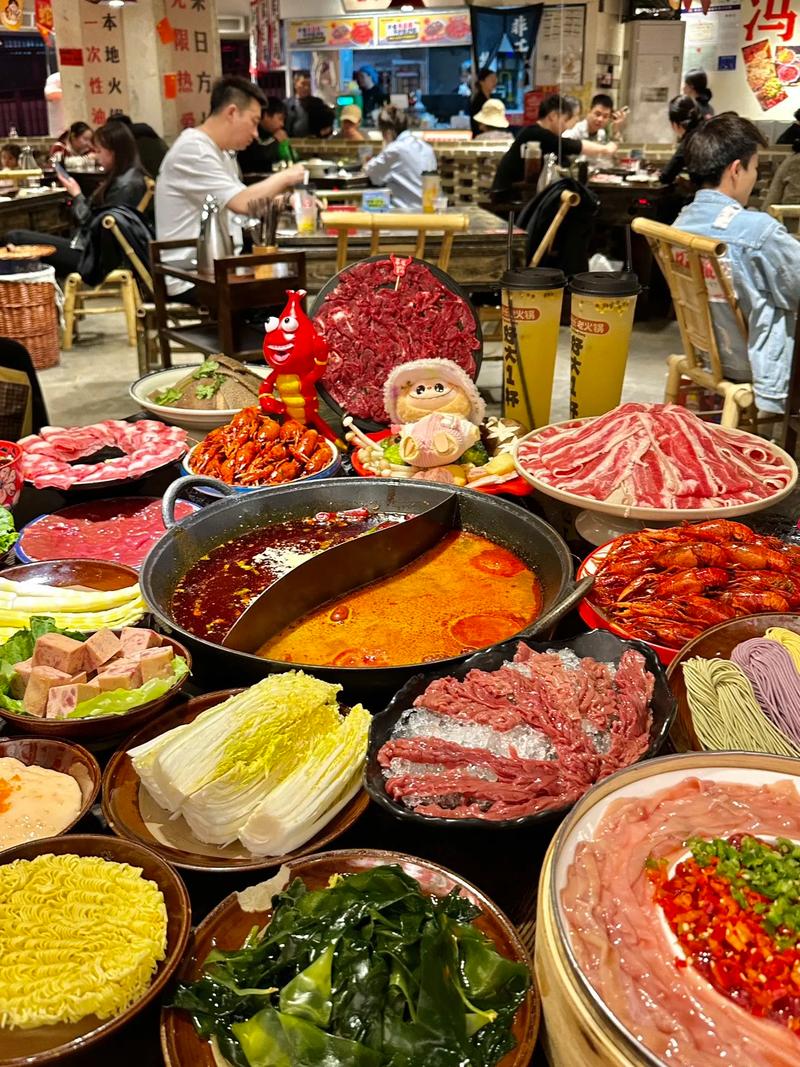
Hot pot (火锅, huǒguō) is less a dish than an entire way of eating — a pot of simmering, flavored broth sits at the center of the table, and diners cook raw ingredients in it themselves, piece by piece, dipping each finished item in a personal sauce before eating. It's communal, it's slow in the best way, and it's one of the most popular meals in China for exactly that reason: it turns dinner into an hour-long social event rather than something you finish in twenty minutes.
How hot pot actually works
A portable burner sits in the middle of the table with a pot of broth on top, kept at a steady simmer throughout the meal. Around it, the table fills with plates of raw ingredients — thinly sliced meat, seafood, tofu, leafy greens, mushrooms, noodles — that diners pick up with chopsticks and lower into the broth themselves. Cooking times vary wildly: thin beef slices need only 10-15 seconds, leafy vegetables a minute or two, tougher items like tripe or lotus root several minutes.
Once cooked, each piece comes out and gets dipped into a personal sauce bowl before eating — most hot pot restaurants offer a sauce bar where you build your own combination from sesame paste, garlic, chilli oil, scallions, cilantro, and fermented bean curd.
The broth: the most important decision
Most hot pot restaurants offer a split pot (鸳鸯锅, yuānyāng guō) — a divided pan with two different broths side by side, usually one spicy and one mild, so the table doesn't have to agree on heat level.
Mala (麻辣) Sichuan broth
Deep red, built on doubanjiang (fermented chilli bean paste), dried chillies, and Sichuan peppercorns, simmered in beef tallow for richness. This broth defines Sichuan hot pot specifically — intensely spicy with the distinctive numbing málà sensation from the peppercorns. Not for the heat-averse, but the defining hot pot experience for a reason.
Mushroom or bone broth
A clear, mild broth built on slow-simmered mushrooms or bones, sometimes with goji berries and dates for sweetness. The mild option for the other side of the split pot, or for anyone avoiding spice entirely. Still deeply flavorful, just without the heat.
What to order
The classic combination spans several categories — order across all of them rather than loading up on just one:
- Thin-sliced meat: beef, lamb, or pork, sliced paper-thin specifically so it cooks in seconds. The single most essential hot pot order.
- Seafood: shrimp, fish balls, squid — cooks quickly and absorbs the broth's flavor well.
- Tofu and tofu products: silken tofu, fried tofu puffs, and tofu skin all behave differently in the pot and are worth ordering a few varieties.
- Vegetables: napa cabbage, lotus root, enoki mushrooms, and leafy greens balance the richness of the meat.
- Starches: wide rice noodles or instant noodles added toward the end of the meal, once the broth has absorbed flavor from everything else cooked in it — this final noodle course is considered by many the best part.
Ordering tip for first-timers: order in smaller rounds rather than everything at once. Hot pot is a slow meal — ordering 4-5 items, cooking through them, then ordering more keeps the broth from getting overcrowded and lets you actually pace the meal properly.
Sauce bar etiquette and combinations
Most hot pot restaurants have a self-serve sauce bar. The most common base is sesame paste (mild, nutty, helps cut spice) mixed with minced garlic, a little sesame oil, and chopped scallions. For more heat, add chilli oil; for tang, a splash of vinegar. Building your own sauce is part of the experience — there's no single correct combination, and most regulars have a personal formula they stick to.
Regional differences worth knowing
Sichuan/Chongqing style is the most internationally famous — intensely spicy mala broth, often with beef tallow for richness, and a no-compromise approach to heat. Beijing style traditionally uses a copper pot with a charcoal chimney in the center, a clear mutton broth, and sesame-based dipping sauce — much milder and more about the quality of thinly-sliced lamb than spice. Cantonese style favors clear, delicate broths built on seafood or chicken, with an emphasis on fresh seafood and lighter ingredients overall.