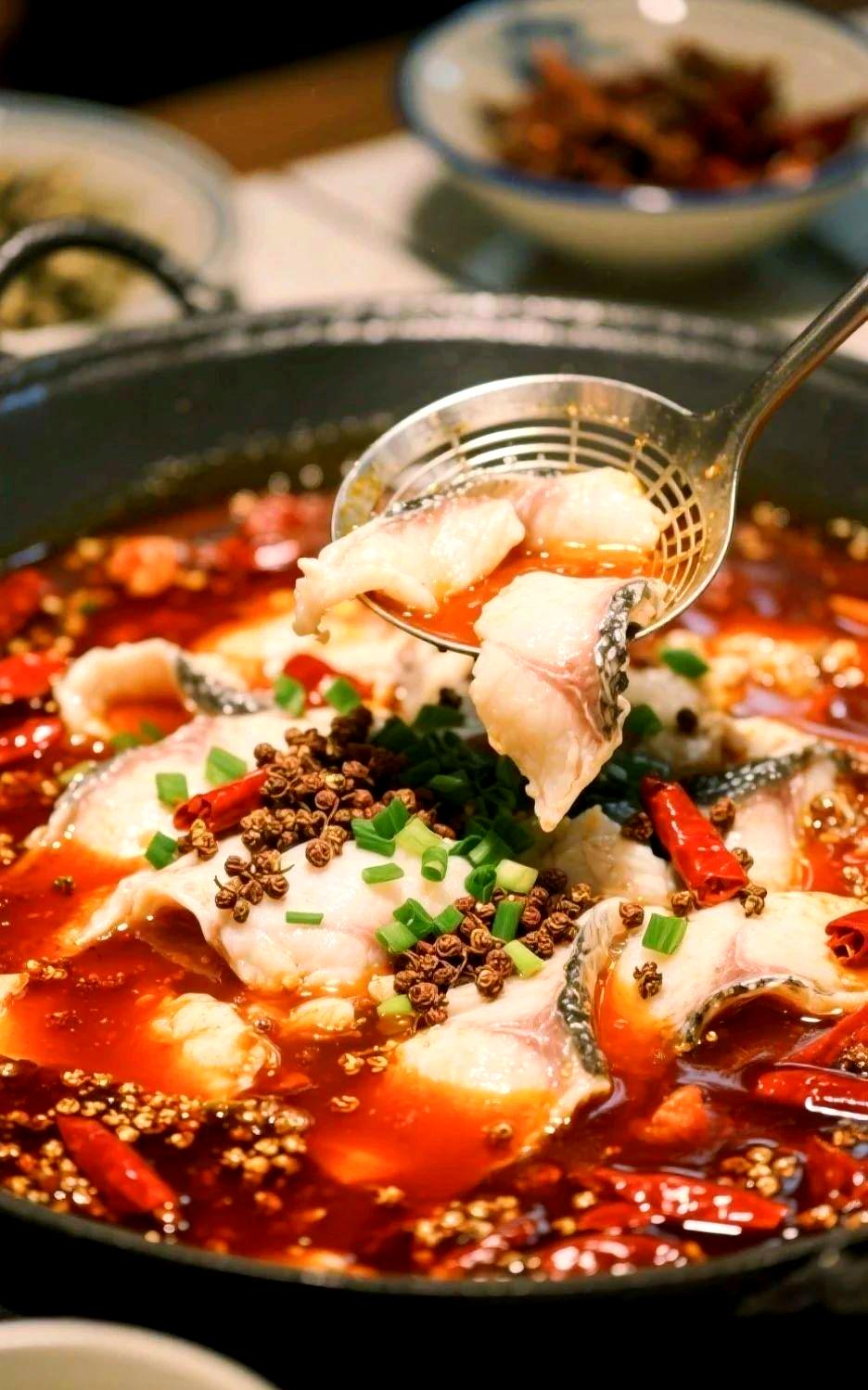
Translate 水煮鱼 (shuǐzhǔyú) literally and you get "water-boiled fish" — a name that suggests something bland, simple, maybe even a little dietetic. The actual dish is the opposite of that: tender fish fillets submerged in a fiery red oil studded with dried chillies and Sichuan peppercorns, one of the most dramatic and intensely flavored dishes in the entire Sichuan repertoire. The disconnect between the name and the reality is part of what makes this dish so interesting.
Why the name is so misleading
The "water-boiled" part of the name refers to the cooking technique, not the flavor — the fish fillets are genuinely poached briefly in a hot liquid, rather than fried or grilled. But that liquid is not plain water. It's a base of chicken or fish stock that's been infused with doubanjiang (fermented chilli bean paste), dried red chillies, Sichuan peppercorns, ginger, and garlic, then poured — chillies, peppercorns, and all — directly over the cooked fish at the table, often with a final pour of smoking-hot oil that makes the dried spices sizzle audibly as it hits the bowl.
The name describes the technical method (poaching in liquid rather than deep-frying) as a point of distinction from other Sichuan fish preparations, not a description of how mild it tastes. Many newcomers expecting something gentle are caught off guard by just how much heat and numbing spice are actually involved.
How it's made
The fish — typically a firm white fish like grass carp, basa, or tilapia — is filleted into thin slices and lightly coated in egg white and cornstarch, which protects the delicate flesh during the brief poaching and keeps it silky rather than letting it toughen. The fillets are poached very briefly, just until opaque, in a stock that's already been built with aromatics and a base layer of spice.
Once the fish is arranged in a deep bowl, it gets topped with a generous layer of dried red chillies and whole Sichuan peppercorns. The final, theatrical step: hot oil is poured directly over this layer of spices at the table, causing it to sizzle and release its full aroma right in front of the diner — a presentation technique common across several Sichuan dishes, designed as much for the dramatic effect and aroma as for the cooking itself.
The mala sensation
Like most signature Sichuan dishes, boiled fish relies on málà (麻辣) — the combination of numbing (麻, from Sichuan peppercorns) and spicy (辣, from chillies) that defines the region's cuisine. The peppercorns create a tingling, almost electric numbness on the tongue and lips that's genuinely unlike anything in Western or even most other Chinese cuisines. It's not a flavor most people instinctively associate with fish, which is part of why this dish surprises so many first-time diners.
How to eat it
Don't eat the whole chillies or peppercorns directly — they're there for flavor and aroma, not to be consumed whole, and biting into a whole dried Sichuan peppercorn delivers an unpleasant, overwhelming numbness with little payoff. Use chopsticks to move them aside as you fish out the actual pieces of fish from the oil and broth beneath. The dish is typically eaten with plain steamed rice, which helps balance the intensity and soaks up the flavorful oil.
Why it's worth ordering
Beyond the flavor itself, shuizhuyu is a genuine showcase of Sichuan cooking philosophy — the contrast between the delicate, silky fish and the aggressive, layered spice of the oil is intentional and considered, not just heat for its own sake. It's also one of the dishes that best demonstrates málà as a sensation distinct from ordinary spiciness, making it a useful dish to order specifically if you want to understand what makes Sichuan cuisine different from other regional Chinese cooking traditions.