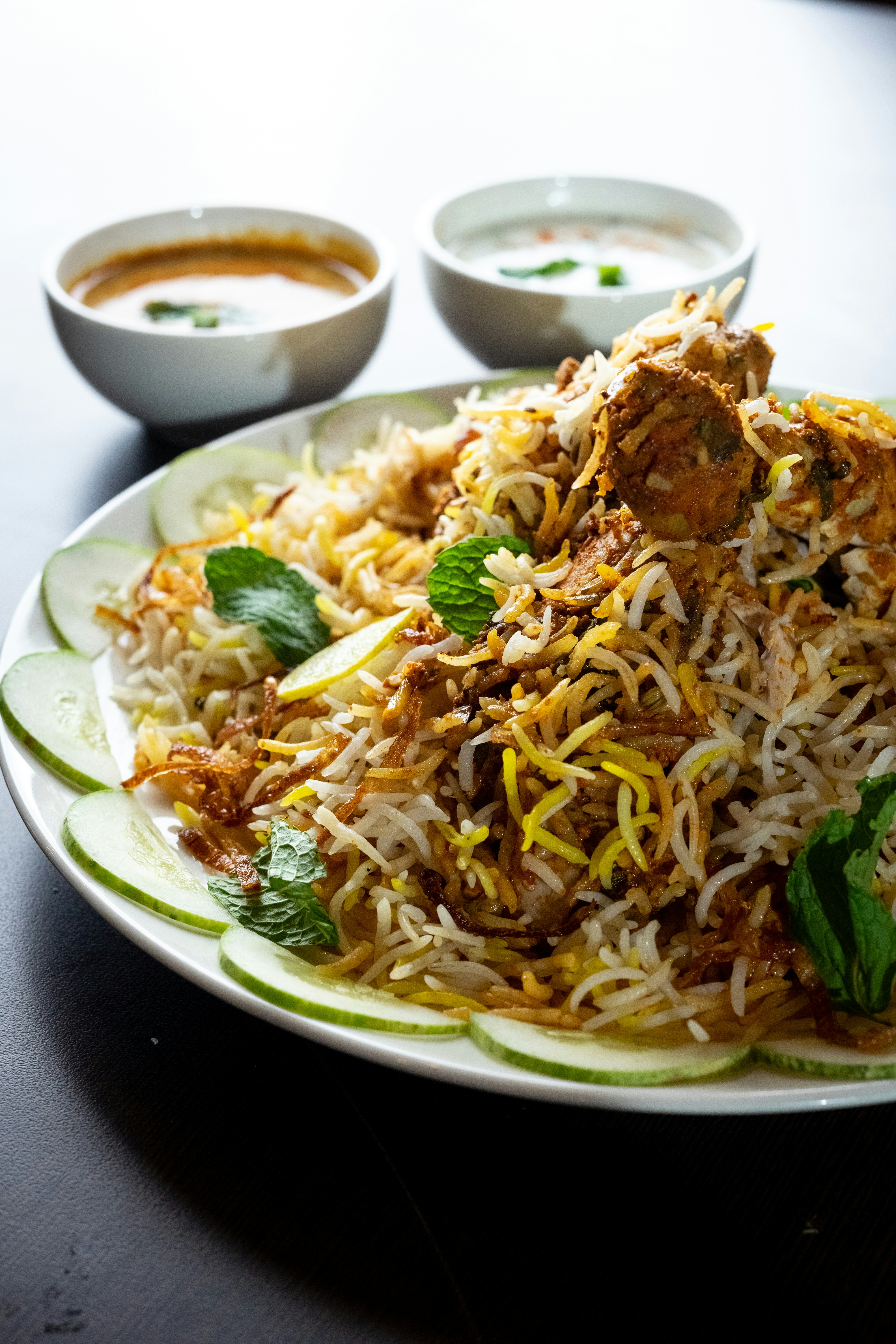
Ask most people to explain the difference between biryani and pulao and they'll say something like "biryani is more spiced" or "pulao is simpler." Both are technically true, but they miss the real distinction — which is about cooking technique, not just seasoning. Understanding the difference makes both dishes more interesting and helps you order more confidently.
The fundamental difference: how the rice is cooked
This is what actually separates biryani and pulao at a technical level, and everything else flows from it.
Biryani: layered and sealed
Biryani is made using the dum method — partially cooked rice and a separately cooked meat or vegetable layer are placed in alternating layers in a heavy pot, which is then sealed (traditionally with dough, now usually with foil and a tight-fitting lid) and cooked on low heat. The steam trapped inside finishes cooking both the rice and the filling simultaneously, while keeping the rice grains distinct and infusing everything with the flavors from both layers.
Pulao: cooked together from the start
Pulao (also spelled pilaf or pilau) cooks the rice and other ingredients together in the same pot from the beginning — the raw rice is added to a base of sautéed aromatics, spices, and sometimes meat or vegetables, then stock or water is added and everything cooks together until absorbed. There's no layering, no sealing, no separate cooking of components.
Why the technique matters for flavor
The layered dum method in biryani creates distinct flavor zones within the same pot — the bottom layer has more contact with heat and absorbs the meat juices; the top layer is more fragrant from the saffron and fried onions scattered between layers. Each spoonful from different parts of the pot can taste subtly different. This complexity is the whole point of biryani.
Pulao produces a more uniform flavor throughout — every grain of rice tastes similar because everything cooked together from the start. This isn't a flaw; it's a different goal. Pulao is more restrained, more elegant, and designed to complement rather than compete with other dishes on the table.
The spice levels
Biryani uses whole spices (cardamom, cloves, cinnamon, bay leaves, star anise) plus ground spices, often including fried onions, saffron, fresh mint, and sometimes rose water or kewra water in the finishing layers. The overall effect is intensely aromatic and complex.
Pulao also uses whole spices but in a lighter hand — the goal is fragrance rather than intensity. A well-made pulao should taste delicately spiced, with individual spice notes distinguishable rather than blended into a single complex mass.
The quick test: if you can see distinct layers of rice, meat, and garnish, and some rice grains are tinged yellow from saffron while others are white, you're eating biryani. If the rice looks uniformly seasoned throughout with ingredients mixed in, it's pulao.
Regional biryani variations worth knowing
Hyderabadi biryani is the most famous globally — raw or semi-cooked meat layered with rice, sealed, and cooked together (kacchi method) or meat cooked first then layered (pakki method). Intensely spiced, deeply savory.
Lucknowi (Awadhi) biryani uses the pakki method with meat cooked separately first. More delicate and fragrant than Hyderabadi, with a lighter touch on spice.
Kolkata biryani is unique for adding potatoes — a legacy of the Nawabs of Awadh who brought the dish to Bengal, where potatoes were added to stretch the expensive meat further. Now considered essential by Kolkata biryani purists.
Which is "better"?
Neither — they serve different purposes. Biryani is a complete meal on its own, designed to be the centerpiece of the table. Pulao works better alongside curries and dal, as a flavorful but not overwhelming base. Ordering biryani and then pairing it with three other strong curries misunderstands what biryani is for; it's already a complete dish. Pulao, by contrast, is specifically designed to sit alongside other things.