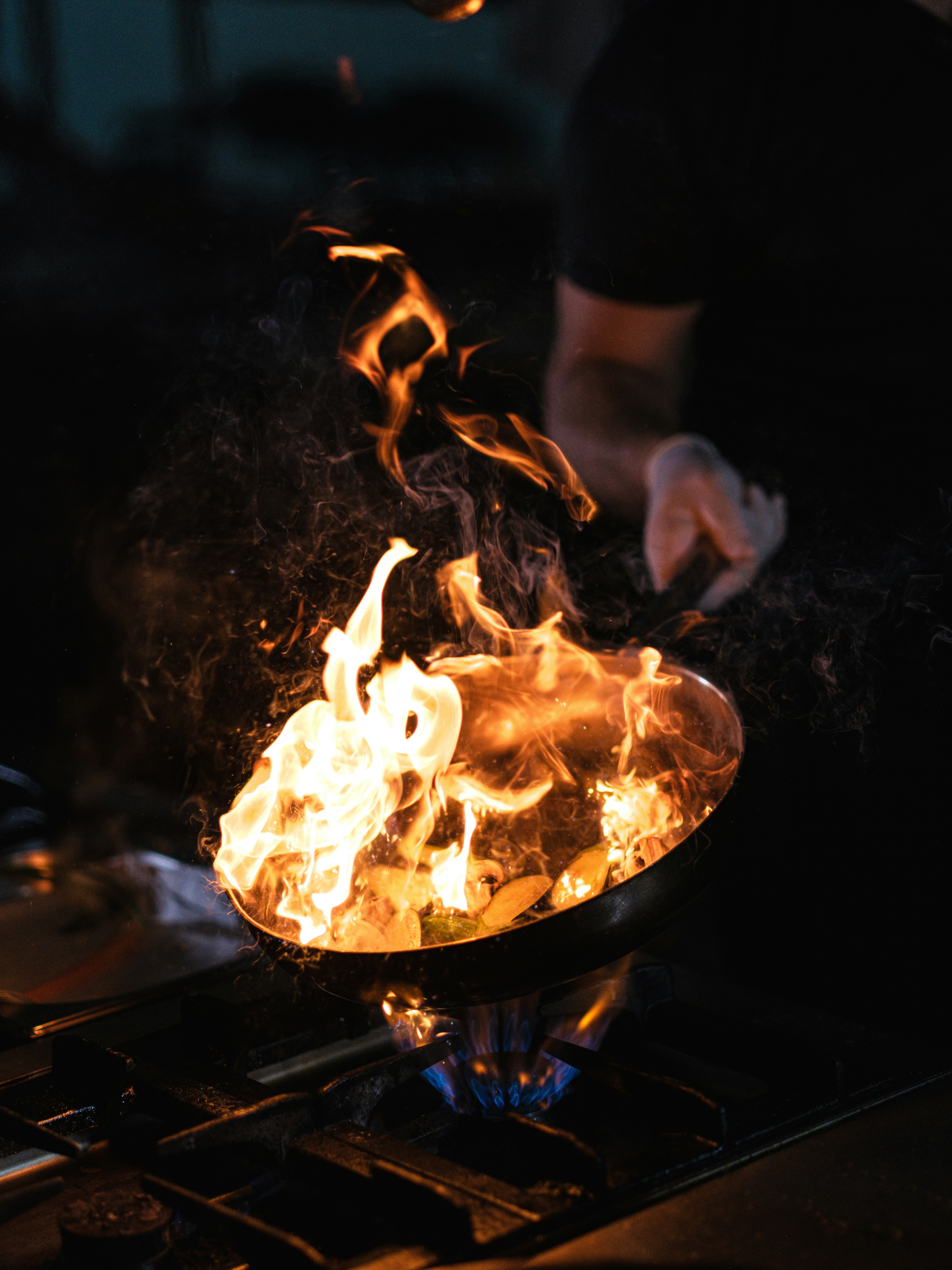
If you've ever eaten stir-fried noodles or fried rice at a good Chinese restaurant and noticed a subtle smokiness, a slight charred edge to the flavor that you can't replicate at home no matter how closely you follow the recipe — that's wok hei. It's not a spice or a sauce. It's a product of heat, technique, and equipment working together in a way that most home kitchens simply can't match. Understanding what it is makes you a better Chinese cook, even if you can't fully reproduce it.
What wok hei actually is
Wok hei (鑊氣) translates from Cantonese as "breath of the wok" — a poetic description of something that's actually a specific set of chemical reactions. When food hits an extremely hot wok (restaurant wok burners reach 100,000–300,000 BTU; a typical domestic gas hob produces around 10,000–15,000 BTU), several things happen simultaneously:
- Maillard reaction: the rapid browning of proteins and sugars at very high temperatures, creating hundreds of new flavor compounds that don't exist in uncooked or slowly cooked food. The same reaction that makes a seared steak taste different from a boiled one.
- Slight char: brief contact with the scorching wok surface creates tiny amounts of char on the food — not burnt, but the very edge of it, contributing a smoky bitterness that contrasts with the savory sauce.
- Flame contact: at high enough temperatures with enough oil, small flare-ups of flame lick the food directly — you can see restaurant wok cooks tossing food through actual flames. This contributes a specific smoky note that's very difficult to replicate without an open flame.
- Rapid evaporation: at extreme heat, moisture from the ingredients evaporates almost instantly rather than pooling — this keeps everything frying rather than steaming, maintaining the texture of each ingredient.
The key insight
Wok hei is fundamentally about heat intensity and speed. Restaurant wok cooking happens in 60-90 seconds of extremely violent heat. Home cooking happens in 5-8 minutes of moderate heat. The food goes through completely different physical and chemical processes, which is why the results taste different even with identical ingredients and seasoning.
Why your home hob can't match it
The gap is one of raw power. A restaurant wok burner puts out enough heat to keep a large steel wok at 300°C+ even when cold ingredients are constantly being added. When you add cold rice or vegetables to a domestic wok, the pan temperature drops dramatically — instead of an immediate aggressive sear, you get a slow steam while the pan recovers temperature. By the time it's hot again, you've already lost the window for wok hei.
This isn't something you can compensate for with technique alone — it's a fundamental equipment limitation. Professional chefs accept this and focus on getting as close as possible within the constraints.
How close you can get at home
The honest answer: you can get noticeably closer than most home cooks do, but you can't fully replicate it. Here are the specific steps that make the biggest difference:
Use a carbon steel wok, not non-stick. Carbon steel holds heat better than thin non-stick pans and can withstand the temperatures needed for proper stir-frying. Season it properly first. A non-stick wok is specifically not suitable for wok hei because non-stick coatings degrade at the temperatures required.
Preheat the wok empty for 3-4 minutes on maximum heat. Most people add oil too early. The wok should be visibly smoking before you add anything. This is the single biggest change most home cooks can make.
Cook in small batches. Adding too much food at once drops the temperature catastrophically. For two portions of fried rice, use only enough for the pan to maintain heat — better to cook in two separate batches than one crowded one.
Use a gas hob if you have one. Gas flame provides more intense, direct heat than electric or induction, and allows the slight flare-ups that contribute to real wok hei. If you have induction, it can work but requires a flat-bottomed carbon steel wok and maximum power settings.
Keep the food moving. Constant tossing and movement exposes more surface area to the hot wok and prevents steaming. Restaurant cooks toss continuously — home cooks tend to stir once every few seconds. Toss more aggressively.
The outdoor burner option: some serious home cooks buy a high-BTU outdoor wok burner (available for $50-150) that approaches restaurant heat levels. If you cook Chinese food frequently and want to seriously chase wok hei, this is the most direct solution. Not suitable for indoor use due to the flame size.
Dishes where wok hei matters most
Not all Chinese dishes require or benefit from wok hei — slow-braised dishes, soups, and steamed preparations don't involve the wok at high heat at all. Wok hei is specifically relevant to stir-fried dishes: fried rice, Hakka noodles, chow mein, kung pao chicken, beef with broccoli, and similar high-heat stir-fries. For these dishes, the technique gap between home and restaurant is most noticeable — and most worth trying to close.