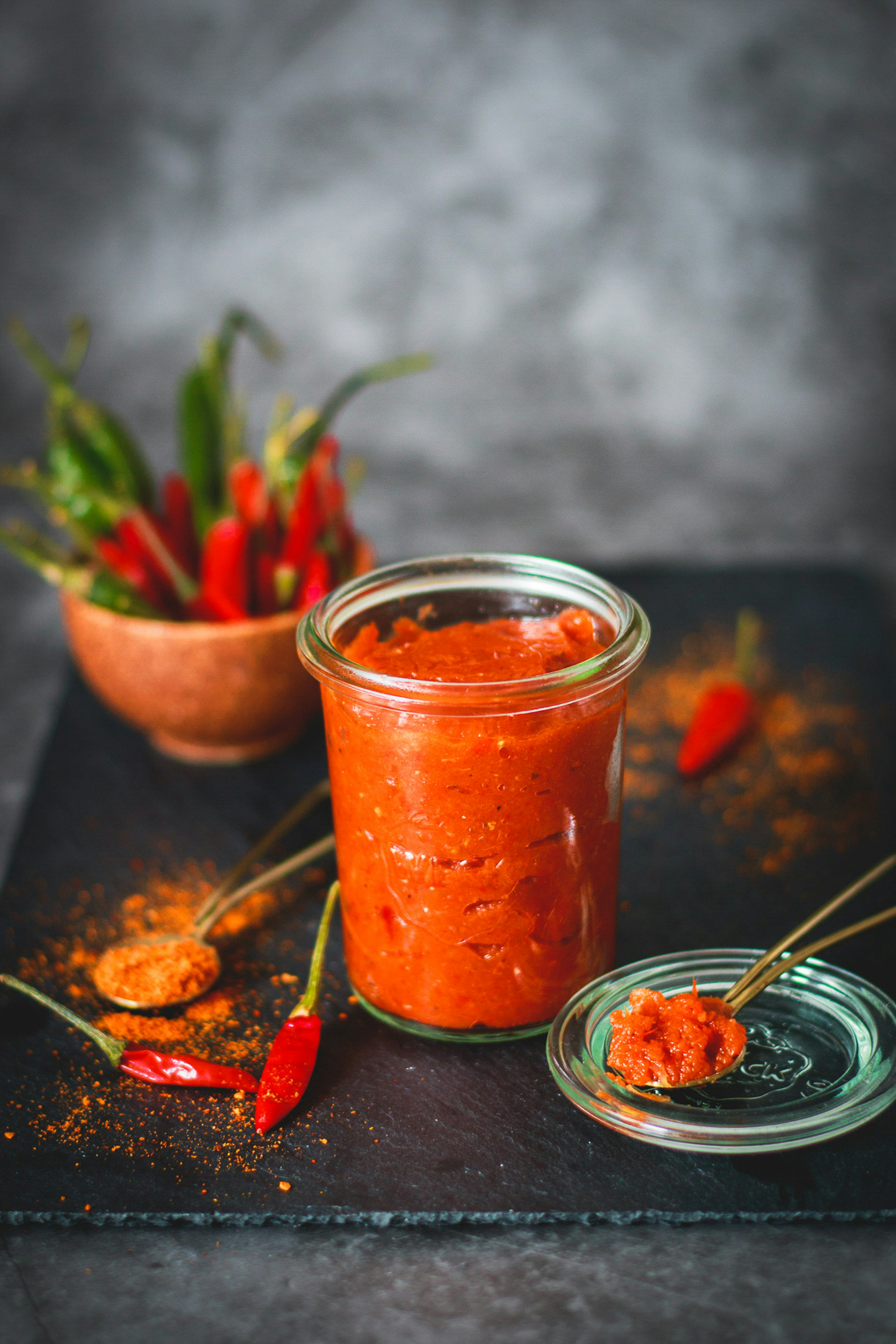
If there's one ingredient that most defines the spicy side of Indo-Chinese cooking, it's Schezwan sauce. It appears on noodles, fried rice, as a dipping sauce, as a marinade, and increasingly in places far outside the Indo-Chinese kitchen — on pizza, in burgers, on momos. Here's everything worth knowing about it.
What Schezwan sauce actually is
Despite the name, Indo-Chinese Schezwan sauce is not the same as the Sichuan doubanjiang (fermented broad bean paste) used in actual Sichuan cooking, though it's loosely inspired by it. Indo-Chinese Schezwan sauce is a cooked condiment built primarily on dried red chillies, garlic, ginger, and oil, with soy sauce, vinegar, and a little sugar added for balance. It's fiery, deeply savory, garlicky, slightly tangy, and almost addictively flavorful.
The name "Schezwan" is an anglicized version of "Sichuan" — the Chinese province famous for spicy cooking — adapted through the phonetic conventions of English speakers in India. You'll also see it spelled "Szechuan," "Sichuan," or "Schezuan" depending on the restaurant. They're all the same sauce.
Schezwan vs. Sichuan: not the same thing
Actual Sichuan cooking gets its characteristic heat from Sichuan peppercorns, which create a numbing, tingling sensation (called "málà") rather than straightforward burn. Indo-Chinese Schezwan sauce skips the peppercorns entirely and goes for pure chilli heat instead, making it hotter in a more direct way but without the complex numbing quality of real Sichuan cooking.
How it's used in Indo-Chinese cooking
Schezwan sauce functions differently depending on the dish:
- As a cooking sauce: stirred into noodles or fried rice during the final toss in the wok, coating everything in its reddish-brown intensity. This is the most common use — Schezwan Fried Rice and Schezwan Noodles are staples on every menu.
- As a base for dry dishes: Schezwan Chicken or Schezwan Paneer uses the sauce as the primary flavoring for stir-fried protein, with less liquid than a Manchurian-style dish.
- As a dipping condiment: served alongside momos (Tibetan dumplings, hugely popular across North India), spring rolls, and other fried starters.
- As a table condiment: many restaurants keep a small pot of Schezwan sauce on the table like ketchup or chilli sauce, for diners to add as they go.
How to make it at home
The good news: Schezwan sauce is surprisingly straightforward to make, and the homemade version is considerably better than most jarred versions.
You need:
- 20-25 dried red chillies (Kashmiri for mild color with less heat; regular dried red chillies for full heat)
- 10-12 garlic cloves
- 1-inch piece fresh ginger
- 3 tablespoons neutral oil (vegetable or sunflower)
- 1 tablespoon soy sauce
- 1 tablespoon rice vinegar or white vinegar
- 1 teaspoon sugar
- Salt to taste
Method:
- Soak the dried chillies in hot water for 20-30 minutes, then drain and roughly chop. Remove seeds for less heat; keep them for full intensity.
- Blend the soaked chillies, garlic, and ginger into a rough paste — not completely smooth, some texture is desirable.
- Heat the oil in a pan over medium heat. Add the paste and cook, stirring frequently, for 10-15 minutes. The paste will darken, lose its raw smell, and start to smell deeply savory.
- Add soy sauce, vinegar, and sugar. Stir to combine and cook for another 2-3 minutes.
- Taste and adjust — more vinegar for tang, more sugar to balance the heat, more soy for depth.
- Cool completely and store in a clean jar in the refrigerator for up to 3 weeks.
Tip: the single most important step is cooking the paste long enough. Undercooked Schezwan sauce tastes raw and sharp; properly cooked sauce tastes deep, rounded, and complex. Don't rush the 10-15 minutes in the pan — use that time to stir frequently and watch the paste transform.
What makes it different from Sriracha or regular chilli sauce
Schezwan sauce and Sriracha are both red, both spicy, and both made primarily from chillies — but they're built for different purposes and taste quite different. Sriracha is fermented, which gives it a tangier, slightly funky quality, and is relatively thin and pourable. Schezwan sauce is cooked rather than fermented, much more intensely garlicky, and thicker — designed to cling to food rather than pour over it. They're not interchangeable in a recipe, though both have a place as condiments depending on what you're eating.