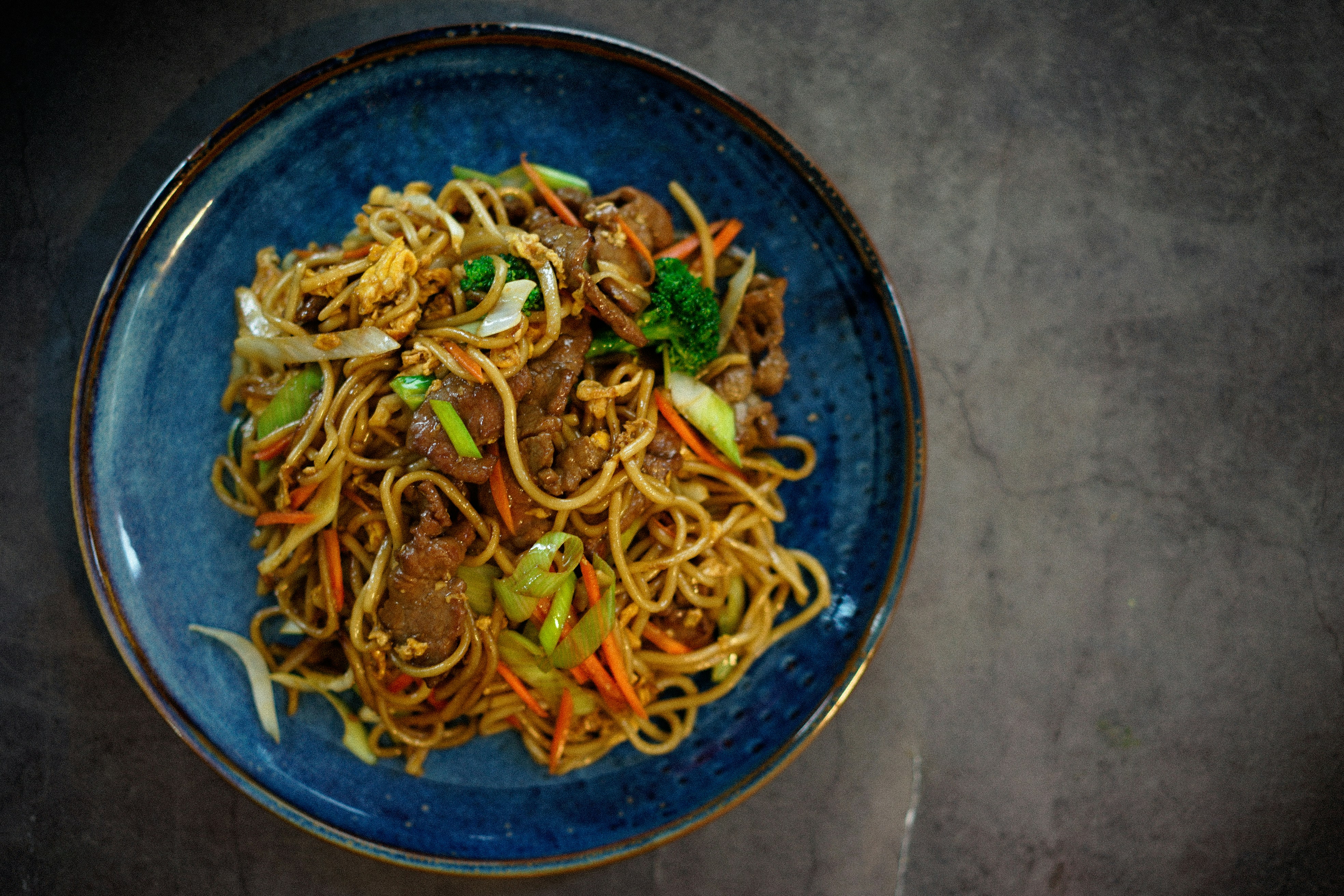
Walk into any Indo-Chinese restaurant and you'll find both Hakka Noodles and Chow Mein on the menu, often sitting right next to each other. They look nearly identical on the plate — both are stir-fried egg noodles with vegetables and sometimes protein. So what's the actual difference, and does it matter which one you order?
Where each one comes from
Hakka Noodles take their name from the Hakka Chinese community — the same people who settled in Kolkata and created Indo-Chinese cuisine. Hakka cooking from the Guangdong province of China favored simple, robust preparations, and their noodle dishes were adapted in India to include Indian seasonings. The "Hakka" in the name is a direct reference to this community and their cooking tradition.
Chow Mein (炒麵) is an older, broader term from Cantonese Chinese that simply means "stir-fried noodles." It predates Indo-Chinese cuisine and appears in Chinese-American, Chinese-British, and other Chinese diaspora cuisines worldwide — all with different characteristics. The Indo-Chinese version was adapted alongside Hakka Noodles and picked up similar Indian-spiced characteristics.
The key differences
Noodle type and texture: Hakka Noodles traditionally use flat or thin round egg noodles that are boiled until just cooked (al dente), then stir-fried. They retain a slight chew and don't crisp up. Chow Mein in the Indo-Chinese style often uses slightly thinner noodles that get more direct wok contact, developing slightly more color and occasional crispiness at the edges.
Sauce and seasoning: This is where most restaurants differentiate the two. Hakka Noodles are typically lighter in color and more subtly seasoned — soy sauce, vinegar, green chillies, and vegetables, without a heavy sauce coating. Chow Mein tends to be darker, saucier, and more intensely flavored, often with more soy sauce and sometimes a touch of oyster sauce or dark soy.
Vegetables and add-ins: Both dishes use similar vegetables (cabbage, carrots, capsicum, spring onions), but Hakka Noodles often feature them more prominently and less cooked-down, giving the dish a fresher quality. Chow Mein vegetables tend to be more thoroughly integrated into the sauce.
The honest truth about restaurant menus
Many Indo-Chinese restaurants — especially smaller, faster-service ones — make Hakka Noodles and Chow Mein essentially identically, just labeling them differently. If the two dishes on a menu taste the same, that's why. The distinction is most meaningful at restaurants that take the differentiation seriously.
Schezwan Noodles: the third option worth knowing
Both Hakka Noodles and Chow Mein have a spicier sibling: Schezwan Noodles (or Schezwan Hakka Noodles, or Schezwan Chow Mein — the naming varies). The base is the same, but the dish is coated in Schezwan sauce — a fiery, garlicky, numbing condiment that turns an already flavorful dish into something considerably more aggressive. Order it if you want heat; the regular versions are comparatively mild.
Which should you order?
- If you want a lighter, fresher noodle dish that won't compete too aggressively with a rich Manchurian or Chilli Chicken on the same table: Hakka Noodles.
- If you want the noodle dish to carry more of the meal on its own, with bolder seasoning: Chow Mein.
- If you eat spicy food without hesitation and want the most flavor-forward option: Schezwan Noodles.
- If the restaurant doesn't clearly differentiate between the two: order whichever name you prefer the sound of — the result will likely be similar.
Tip: the best way to eat either dish is alongside a Manchurian or Chilli dish — the noodles act as a base that balances the intensity of the sauced proteins. Ordering noodles alone misses the point of how Indo-Chinese food is meant to be eaten.